
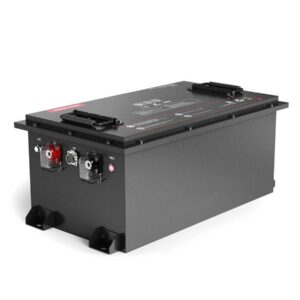
What Will Lithium-Ion Golf Cart Battery Charging Speed Look Like in 2025?
By 2025, lithium-ion golf cart batteries will offer significantly faster charging speeds, with full charges achievable in just 1 to 2 hours. Advancements in fast-charging technologies, improved thermal management, and AI-driven charging algorithms will enable these faster charge times. These innovations, powered by companies like LiFePO4 Battery Factory, will reduce downtime, enhance energy density, and integrate with sustainability goals like renewable energy use and recycling.
How Will Fast-Charging Technologies Evolve by 2025?
By 2025, lithium-ion batteries will incorporate advanced technologies such as silicon-anode and solid-state electrolyte designs. These improvements will facilitate faster ion movement and reduce internal resistance, enabling faster charging. Chargers will support current delivery of up to 300A+, drastically reducing charge times by 50% compared to current models. Additionally, companies like LiFePO4 Battery Factory are already testing 15-minute “flash charge” systems, designed to provide partial boosts during short breaks.
Industry collaborations are accelerating these advancements. For instance, Redway’s partnerships with companies like Club Car are integrating automotive-grade charging technology into golf carts. These systems utilize pulsed charging to minimize heat buildup, achieving up to 80% charge in under 25 minutes without compromising battery longevity. Meanwhile, wireless charging systems will allow golf carts to charge automatically while parked, eliminating the need for manual connections.
What Factors Influence Charging Speed in Lithium-Ion Batteries?
Charging speed in lithium-ion batteries is influenced by several key factors. These include the battery’s cell chemistry (such as NMC vs. LFP), the charger’s output (up to 10kW by 2025), ambient temperature tolerance, and the precision of the battery management system (BMS). In 2025, lithium-ion batteries will feature graphene-coated anodes and multi-stage cooling systems, which will mitigate factors like lithium plating and allow consistent 2C–4C charge rates without sacrificing cycle life.
How Do 2025 Lithium-Ion Batteries Compare to Lead-Acid Models?
| Attribute | 2025 Lithium-Ion | Lead-Acid |
|---|---|---|
| Full Charge Time | 90 minutes | 6–8 hours |
| Cycle Life | 5,000+ | 500–800 |
| Energy Efficiency | 95% | 70–80% |
| Upfront Cost | $1,200 | $600 |
2025 lithium-ion golf cart batteries will provide significant performance advantages over traditional lead-acid batteries. They charge in a fraction of the time (90 minutes vs. 6–8 hours) and last much longer (5,000+ cycles vs. 500–800). Additionally, lithium-ion batteries are far more energy-efficient, converting 95% of the energy they consume into usable power, compared to only 70–80% with lead-acid batteries.
How Sustainable Are Next-Gen Fast-Charging Battery Systems?
Next-generation lithium-ion batteries will be designed with sustainability in mind. By 2025, they will feature 98% recyclable components and utilize cobalt-free chemistries to reduce environmental impact. LiFePO4 Battery Factory is leading the way with solar-compatible charging stations equipped with vehicle-to-grid (V2G) capabilities, allowing golf carts to supply excess energy back to the grid or clubhouses. This innovation will create new revenue streams for golf course operators and further promote sustainability.
Moreover, recycling partnerships will ensure that up to 90% of battery materials are repurposed, minimizing waste. A prime example of this is Augusta National, where a pilot program is shredding expired batteries on-site and feeding recovered materials directly into new battery production, supporting a circular economy.
LiFePO4 Battery Expert Views
“The future of lithium-ion batteries isn’t just about faster charging—it’s about creating intelligent energy ecosystems,” says Dr. Elena Torres, Chief Battery Architect at Redway. “We are developing systems where golf carts not only charge faster but are integrated into the broader energy infrastructure, dynamically adjusting their charge rates in response to solar energy availability. This is the future of sustainable mobility.”
Conclusion
By 2025, advancements in lithium-ion golf cart batteries will revolutionize the way we think about charging speed and sustainability. With faster charging times, improved efficiency, and enhanced sustainability features, these batteries will drastically outperform traditional lead-acid options. Businesses in the golf cart industry should embrace these changes and explore new charging technologies to stay ahead of the curve.
FAQs
Can 2025 lithium batteries charge in cold weather?
Yes. The advanced electrolytes used in 2025 lithium batteries enable charging in temperatures as low as -30°C at 75% of normal speed, far outpacing lead-acid batteries, which fail below 0°C.
Do fast-charging batteries degrade faster?
Not in 2025 models. With new sacrificial anode coatings and adaptive BMS systems, these batteries will retain 80% of their capacity after 3,000 charge cycles, even with daily fast charging.
Will old chargers work with 2025 batteries?
Most lithium chargers from 2023 onward are firmware-upgradable and can support 2025 battery charging speeds. However, older chargers may not be compatible with ultra-fast charging modes.