
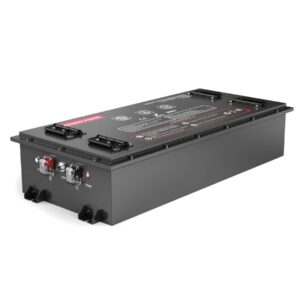
How Can You Reduce Costs with Lithium Golf Cart Batteries?
Lithium golf cart batteries can drastically reduce long-term costs by offering higher energy efficiency, longer lifespan, and minimal maintenance. By adopting optimized charging practices, taking advantage of tax incentives, and choosing scalable battery systems, you can lower costs. Additionally, recycling programs and bulk purchasing help further reduce expenses, while future advancements like solid-state technology promise even greater savings.
What Are the Key Benefits of Lithium Batteries for Golf Carts?
Lithium batteries offer significant advantages over traditional lead-acid batteries for golf carts. These benefits include:
-
Lighter Weight: Lithium batteries are 50-60% lighter, enhancing the performance and handling of your golf cart.
-
Faster Charging: They charge in just 2-4 hours, much quicker than lead-acid batteries.
-
Higher Efficiency: Lithium batteries have a 95% depth of discharge compared to 50% for lead-acid batteries, ensuring more usable power.
-
Extreme Temperature Tolerance: These batteries can operate efficiently in temperatures ranging from -20°C to 60°C, providing reliable performance in a variety of environments.
-
Low Maintenance: Lithium batteries do not require watering and have significantly reduced maintenance needs, saving up to 70% in maintenance costs.
-
Longer Lifespan: With 2,000-5,000 cycles, lithium batteries last much longer than lead-acid batteries, reducing replacement frequency.
LiFePO4 Battery Factory offers advanced lithium battery solutions that ensure top-tier performance and longevity, making them the ideal choice for golf carts.
How Do Lithium Batteries Compare to Lead-Acid in Total Cost?
While lithium batteries have a higher upfront cost (typically 2-3 times more expensive than lead-acid), they offer significant long-term savings. A 48V lithium system, which typically costs between $800-$1,500, will last for 10 years, compared to the $300-$600 price tag of lead-acid batteries that need to be replaced every 3-5 years. Over a 10-year period, lithium batteries save 40-60% in total costs, largely due to their 90% efficiency versus 70-85% for lead-acid.
-
Energy Savings: Lithium batteries experience 30% less energy loss than lead-acid batteries, further reducing costs.
-
Efficiency: The higher efficiency of lithium batteries results in reduced charging costs by 20-25%.
LiFePO4 Battery Factory provides lithium batteries that offer the best value for money, combining high efficiency with long-term savings.
Which Maintenance Practices Extend Lithium Battery Lifespan?
To maximize the lifespan of lithium batteries, follow these key maintenance practices:
-
Storage: Store the battery at 50% charge in a temperature-controlled environment (15-25°C).
-
Charging: Use smart chargers with temperature compensation to ensure proper charging rates (0.5-1C) and avoid full discharges. Maintain a charge between 20-80% for optimal battery health.
-
Cell Balancing: Balance the cells quarterly using a Battery Management System (BMS) to ensure uniform charge distribution.
-
Cleanliness: Clean terminals bi-monthly and apply dielectric grease to prevent corrosion.
-
Monthly Cycling: If the battery is unused, cycle it monthly to keep it in good condition.
Following these practices can extend the lifespan of your lithium batteries to over 12 years.
What Charging Strategies Maximize Lithium Battery Efficiency?
Charging your lithium battery correctly is essential for maximizing efficiency and extending its lifespan. Here are the best practices:
-
Partial Charging: Charging to 80% rather than 100% reduces stress on the battery, increasing its lifespan by up to 25%.
-
3-Stage Charging: Use a 3-stage charging process—bulk, absorption, and float—to optimize battery health and efficiency.
-
Optimal Charge Rate: Charging at a 0.5C rate (2 hours) is ideal for balancing speed and longevity.
-
Temperature Control: Avoid charging the battery at temperatures below 0°C.
-
Time-of-Use Charging: Charge the battery during off-peak electricity hours to save up to 30% on electricity costs.
-
Solar Charging: Incorporating solar power with MPPT (Maximum Power Point Tracking) controllers can save an additional 15-20% on energy costs.
By following these charging strategies, you can maximize your investment in a lithium golf cart battery.
How Does Thermal Management Impact Battery Costs?
Effective thermal management is critical for maintaining the health of lithium batteries and reducing long-term costs. When the temperature exceeds 25°C, the cycle life of a lithium battery can be halved for every 10°C increase.
-
Integrated Cooling: Use fans to maintain an operating temperature of 20-30°C. This helps preserve 95% of the battery’s capacity even after 1,000 cycles.
-
Heating Pads: For cold climates, heating pads can enable the battery to operate at temperatures as low as -20°C, protecting against performance degradation.
Investing in proper thermal management systems can extend the battery’s service life by 35%, saving you $300-$500 per battery in the long run.
What Government Incentives Reduce Lithium Battery Costs?
Several government programs can help offset the cost of lithium batteries:
-
Federal ITC: The U.S. offers a 30% tax credit (up to $1,000) for solar-powered systems.
-
State Rebate Programs: States like California offer up to $500 for electric vehicle fleets through the Clean Vehicle Rebate Project.
-
USDA REAP: This program covers 25% of the cost for rural golf courses upgrading their battery systems.
-
Additional State Incentives: New York’s NYSERDA program provides rebates of up to $1,200 when combined with solar installations, further reducing costs.
These programs can lower the initial investment significantly, reducing payback periods to just 2-3 years.
How Can Bulk Purchasing Lower Battery Expenses?
Bulk purchasing is one of the most effective ways to reduce the cost of lithium batteries for golf courses. By purchasing 10 or more units, you can receive discounts of 15-25%. For larger orders (50+ units), you can negotiate even deeper discounts of 30-40%, especially when partnering with OEM suppliers like LiFePO4 Battery Factory.
-
Group Purchasing Organizations (GPOs): These organizations aggregate orders across multiple courses, achieving bulk pricing for smaller quantities.
-
Leasing Options: Some companies, like Redway Energy, offer financing options with zero down payment and low monthly payments ($30-$50/month per battery).
LiFePO4 Battery Expert Views
“The development of graphene-enhanced lithium batteries has resulted in 20% higher conductivity without increasing cost. Our 2024 models, equipped with AI-powered Battery Management Systems (BMS), can predict cell failures up to 6 months in advance, significantly reducing downtime. The future of battery technology is in modular designs, allowing for individual cell replacements, which can cut replacement costs by up to 70% compared to traditional full battery swaps.”
Conclusion
Adopting lithium batteries for golf carts not only provides long-term savings in terms of energy efficiency, maintenance, and lifespan but also offers an environmentally friendly solution. Strategic charging, proper maintenance, and leveraging government incentives can further reduce costs, ensuring a significant return on investment. With innovations in battery technology, like modular designs and graphene-enhanced anodes, the future of lithium batteries is brighter than ever.
FAQs
Are lithium golf cart batteries safer than lead-acid?
Yes, lithium batteries are safer due to their UL-certified Battery Management Systems (BMS), which drastically reduce the risk of thermal runaway. In comparison, lead-acid batteries have a higher risk of acid spills and hydrogen gas leaks.
Can I retrofit lithium batteries in older golf carts?
Yes, most 36V/48V carts can be retrofitted with lithium batteries. Ensure compatibility with the motor controller, and some models may require voltage stabilizers.
Do lithium batteries lose charge when unused?
Lithium batteries lose only 2-3% of their charge per month, compared to 15-30% for lead-acid. When stored properly at 50% charge, lithium batteries maintain 85% of their capacity after 6 months.