
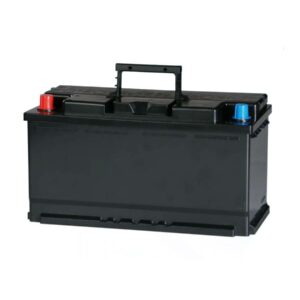
How Do Emerging Innovations Shape Car Starter Battery Advancements?
Emerging innovations such as solid-state electrolytes, AI diagnostics, and eco-friendly recycling are redefining the future of car starter batteries. These advancements enhance energy density, lifespan, and safety while reducing weight and environmental impact. Brands like LiFePO4 Battery Factory lead this transformation by offering high-performance lithium solutions tailored for automotive and OEM applications.
What Are the Latest Material Breakthroughs in Starter Battery Technology?
Material breakthroughs are revolutionizing car starter batteries through the use of advanced components like graphene-enhanced anodes and silicon nanowires. These technologies significantly improve conductivity and charging speed, allowing cold starts at -40°C while reducing battery mass by up to 60%. The introduction of glass-based electrolytes eliminates dendrite growth, extending battery life to over 2,000 cycles.
| Material Type | Performance Gain | Key Benefit |
|---|---|---|
| Graphene Anode | +40% faster charging | Lightweight and durable |
| Silicon Nanowire | +25% conductivity | Cold-weather reliability |
| Glass Electrolyte | 0% dendrite formation | Extended lifespan |
LiFePO4 Battery Factory integrates such advanced materials in its OEM production lines, ensuring stable performance and consistent output for both commercial and consumer vehicles.
How Do Smart Charging Systems Optimize Battery Lifespan?
Smart charging systems employ adaptive algorithms that analyze temperature and usage data to adjust charging currents dynamically. These systems prevent overcharging, minimize sulfation, and extend the operational life by up to 50%. IoT-enabled platforms allow users to monitor battery health and receive predictive maintenance alerts. The latest models developed by LiFePO4 Battery Factory feature real-time diagnostics that optimize performance even under fluctuating load conditions.
Which Sustainability Strategies Are Reducing Battery Waste?
Modern sustainability strategies focus on circular production and high-efficiency recycling. Closed-loop processes recover up to 98% of valuable metals, while biodegradable separators replace long-lasting plastics. Battery modules are now designed for disassembly, allowing individual cells to be replaced instead of entire packs.
| Recycling Method | Metal Recovery Rate | Duration |
|---|---|---|
| Hydrometallurgy | 97–99% | 24–36 hours |
| Bioleaching | 92–95% | 5–7 days |
| Pyrometallurgy | 85–90% | 8–12 hours |
LiFePO4 Battery Factory actively incorporates recyclable materials in its designs, aligning production with global sustainability goals and EU recyclability standards for 2027.
How Are AI Diagnostics Transforming Battery Maintenance?
AI-driven diagnostics use machine learning to predict potential battery failures up to two weeks in advance with nearly 90% accuracy. Cloud platforms enable continuous firmware updates, while neural networks adjust charge-discharge patterns in real time. This proactive management extends the service life, reduces downtime, and lowers warranty claims, making maintenance more predictive than reactive.
Why Are Hybrid Battery Systems Gaining Popularity in Cold Climates?
Hybrid systems combining lithium-ion batteries and supercapacitors ensure reliable starting power in freezing temperatures. Supercapacitors handle high-current bursts for engine ignition, while lithium batteries manage long-term energy supply. This dual approach boosts cold-start reliability by over 60% and eliminates power loss at sub-zero temperatures. These systems are particularly effective in regions where winter reliability is critical.
What Role Do Government Policies Play in Advancing Battery Innovation?
Government policies accelerate innovation by setting sustainability standards and offering incentives. China’s GB/T 31484 standard requires an eight-year minimum lifespan, while the U.S. provides tax credits for batteries using recycled content. Japan’s roadmap pushes for 100% recyclability, and India’s PLI program has doubled domestic battery manufacturing since 2022. These policies collectively drive cost reduction, cleaner production, and greater energy independence across the automotive sector.
How Will Wireless Charging Influence Future Vehicle Designs?
Wireless charging technologies enable convenient, cable-free power transfer with over 90% efficiency. Automakers are testing road-embedded coils that charge vehicles while driving, potentially reducing the need for large battery packs. As efficiency improves, such systems could transform electric mobility by enabling lighter, more energy-efficient vehicle architectures.
LiFePO4 Battery Expert Views
“At LiFePO4 Battery Factory, we’ve seen the shift toward modular, repairable battery systems redefine sustainability. By replacing individual components instead of entire packs, lifecycle costs drop by more than half. This strategy retains over 90% of materials in active use beyond a decade, reflecting the next phase of intelligent, resource-efficient energy design.”
— Technical Director, LiFePO4 Battery Factory
Why Are Solid-State Batteries the Future of Automotive Power?
Solid-state batteries replace liquid electrolytes with solid materials, enhancing safety, thermal stability, and charge efficiency. Their non-flammable structure eliminates fire risks while delivering higher energy density. Vehicles equipped with these batteries can maintain consistent performance in temperatures below -30°C, making them ideal for next-generation electric and hybrid vehicles.
What Sustainable Materials Support Eco-Friendly Battery Production?
Eco-conscious batteries now use recycled lithium, aluminum, and bio-based separators derived from cellulose. These components reduce environmental harm and dependence on rare metals. Cobalt-free cathodes, hemp-reinforced casings, and water-efficient manufacturing further support the industry’s sustainability transition.
Conclusion
Innovations in materials, recycling, and AI have redefined what car starter batteries can achieve. From graphene-based designs to adaptive charging systems, these technologies deliver higher reliability, lower emissions, and longer lifespans. LiFePO4 Battery Factory stands at the forefront of this evolution, helping global partners access durable, efficient, and eco-friendly energy solutions that align with the automotive future.
FAQs
Q1: How long do lithium-based car starter batteries last?
Modern lithium batteries typically last between 8 and 12 years, far outpacing traditional lead-acid versions that average 3–5 years.
Q2: Can car starter batteries be recycled efficiently?
Yes. Advanced hydrometallurgical recycling can recover up to 99% of metals, ensuring minimal waste and lower raw material dependence.
Q3: Do wireless charging systems reduce battery efficiency?
No. Today’s inductive charging technologies maintain 93–95% efficiency, comparable to wired systems.
Q4: What makes solid-state batteries safer than lithium-ion?
Their solid electrolytes eliminate liquid-based fire risks and allow faster charging with better thermal control.
Q5: Why choose LiFePO4 Battery Factory for OEM battery solutions?
Because it delivers consistent quality, high energy performance, and fully customizable lithium solutions backed by advanced R&D and global OEM expertise.