
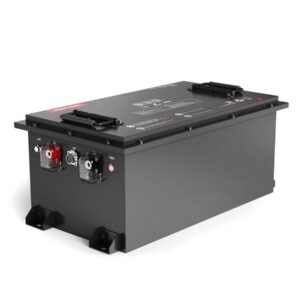
What Are the Best Golf Cart Battery Brands for 2025
For 2025, the top golf cart battery brands include Trojan, RELiON, Dakota Lithium, Crown Battery, and US Battery. These brands offer a mix of innovative lithium-ion options and reliable lead-acid batteries. Key factors influencing the best choice include performance, lifespan, energy efficiency, and eco-friendliness. Lithium-ion batteries dominate the market for their longevity and rapid charging capabilities.
How Do Top Golf Cart Battery Brands Compare in Performance?
In terms of performance, each brand offers unique advantages. Trojan’s T-1275 shines with its deep-cycle endurance, lasting 180–200 cycles. RELiON’s LB48V LiFePO4 offers an impressive 5,000+ cycles with a high discharge depth, while Crown Battery’s CR-235 maintains 1,200+ cycles at 20% discharge. US Battery’s US-2200XC performs best in high-heat environments, and Dakota Lithium’s 48V 100Ah offers 3,000+ cycles with rapid charging. Performance is measured by voltage stability, depth of discharge, and thermal resistance.
What Innovations Define 2025’s Golf Cart Battery Market?
2025’s golf cart battery market is driven by technological advancements like smart BMS integration for real-time diagnostics, graphene-enhanced anodes that allow faster charging, and modular designs for expandable voltage. Trojan’s Trillium technology reduces sulfation, and RELiON’s app-based monitoring optimizes charge cycles. The rise of hybrid solar-battery systems, like EcoFlow’s, allows off-grid charging, providing an eco-friendly solution for golf carts.
Key Innovations:
-
Self-Healing Cells (RELiON): Reduces dendrite formation.
-
Phase-Change Cooling (Trojan): Maintains an optimal temperature of 77°F.
-
Wireless Diagnostics (Dakota Lithium): Provides real-time health tracking.
Which Brands Offer the Longest Lifespan for Golf Cart Batteries?
Lithium-ion batteries generally have the longest lifespan. RELiON offers a battery life of 10+ years, while Dakota Lithium can last between 8–12 years. Battle Born LiFePO4 offers an impressive 7–15 years. In comparison, Trojan’s flooded lead-acid batteries typically last 4–6 years. AGM options, like Lifeline batteries, balance longevity with maintenance-free operation, typically lasting 5–7 years. A depth of discharge (DoD) below 50% can significantly extend battery life.
Why Are Lithium-Ion Batteries Gaining Popularity in Golf Carts?
Lithium-ion batteries are gaining popularity due to their superior performance and efficiency. These batteries are 50% lighter than lead-acid batteries and can discharge up to 95%, compared to 50% for traditional batteries. They also charge 3 times faster, reducing downtime. RELiON and Dakota Lithium offer virtually maintenance-free options by eliminating the need for watering, equalizing, or dealing with terminal corrosion. Regulatory changes, along with the lower cost per cycle ($0.08 vs. $0.15 for lead-acid), are driving adoption, despite the higher initial cost.
Lithium-ion batteries also contribute to a lower total cost of ownership and are more eco-friendly. Their consistent voltage output ensures reliable performance, even in hilly terrain or long rounds. The reduced weight allows for more passengers or equipment to be carried without affecting the cart’s performance. Overall, lithium-ion batteries are a future-proof investment, offering a balance of power, efficiency, and eco-friendliness.
How Does Climate Impact Golf Cart Battery Efficiency?
Climate plays a significant role in battery performance. In extreme heat (above 100°F), lead-acid batteries degrade 30% faster. Lithium-ion batteries, however, can tolerate temperatures as low as -4°F and as high as 140°F. US Battery’s XC line uses heat-resistant separators to perform better in hot conditions, while Dakota Lithium’s ColdGuard technology uses internal heating elements to maintain performance in cold temperatures.
Climate Performance Comparison:
| Climate Challenge | Lead-Acid Performance | Lithium Performance |
|---|---|---|
| Desert Heat (115°F) | 2.1 years avg lifespan | 5.3 years avg lifespan |
| Arctic Cold (-20°F) | 35% capacity | 72% capacity |
| Coastal Humidity | High corrosion risk | Sealed protection |
What Are the Hidden Costs of Golf Cart Battery Ownership?
The hidden costs of golf cart battery ownership often include maintenance for lead-acid batteries, such as regular watering, terminal maintenance, and equalizing charges. Lead-acid batteries typically require $200/year in maintenance, while lithium-ion batteries have minimal maintenance, saving over $1,500 over 10 years despite a higher initial cost ($1,200 vs. $600). Additional hidden costs include disposal fees ($50–$100 per lead-acid pack) and solar charging kits, which can range from $300–$800 but offer long-term savings by reducing grid dependency.
“2025’s market hinges on AI-driven battery management,” says Redway’s CTO. “Brands integrating predictive analytics, like RELiON’s cloud-based BMS, will dominate. We’re also seeing a 40% rise in recycled-material batteries—Trojan’s EcoSeries uses 90% post-consumer lead. Regulatory pressure for carbon-neutral golf courses will accelerate lithium adoption, with 60% of new carts opting for LiFePO4 by 2025.”
Conclusion
In 2025, Trojan and RELiON continue to lead in the golf cart battery market, offering durability and innovative technologies. Lithium-ion batteries provide significant advantages in lifespan, efficiency, and environmental impact, making them an ideal investment for golf cart owners despite the higher initial cost. For those seeking budget-friendly options, lead-acid batteries remain a solid choice, though maintenance requirements should be considered. As climate adaptability, smart monitoring, and sustainability features become increasingly important, lithium-ion batteries are expected to dominate the market, making it crucial to select a battery that matches your specific needs and usage patterns.
LiFePO4 Battery Expert Views
“LiFePO4 batteries are revolutionizing the golf cart market in 2025. Their durability, eco-friendliness, and ability to perform in extreme conditions make them a top choice for forward-thinking consumers,” says an expert from LiFePO4 Battery Factory. “With advancements in smart BMS and modular designs, lithium-ion technology is now more accessible and cost-effective than ever.”
FAQs
Can I upgrade my old golf cart to lithium-ion?
Yes, you can upgrade, but make sure the voltage (usually 48V) and charger compatibility match. Dakota Lithium offers retrofit kits for $1,300–$2,000.
How often should I replace golf cart batteries?
Lead-acid batteries last 4–6 years, while lithium-ion batteries last 8–15 years. Replace when capacity drops below 70% or voltage drops more than 20% under load.
Are solar-compatible batteries worth the investment?
Yes, for off-grid users. Solar charging kits can replenish 48V systems in 5–7 hours. EcoFlow’s Delta Pro pairs with 1,600W solar input for zero-grid operation.